
Click here to return to the Convention Page
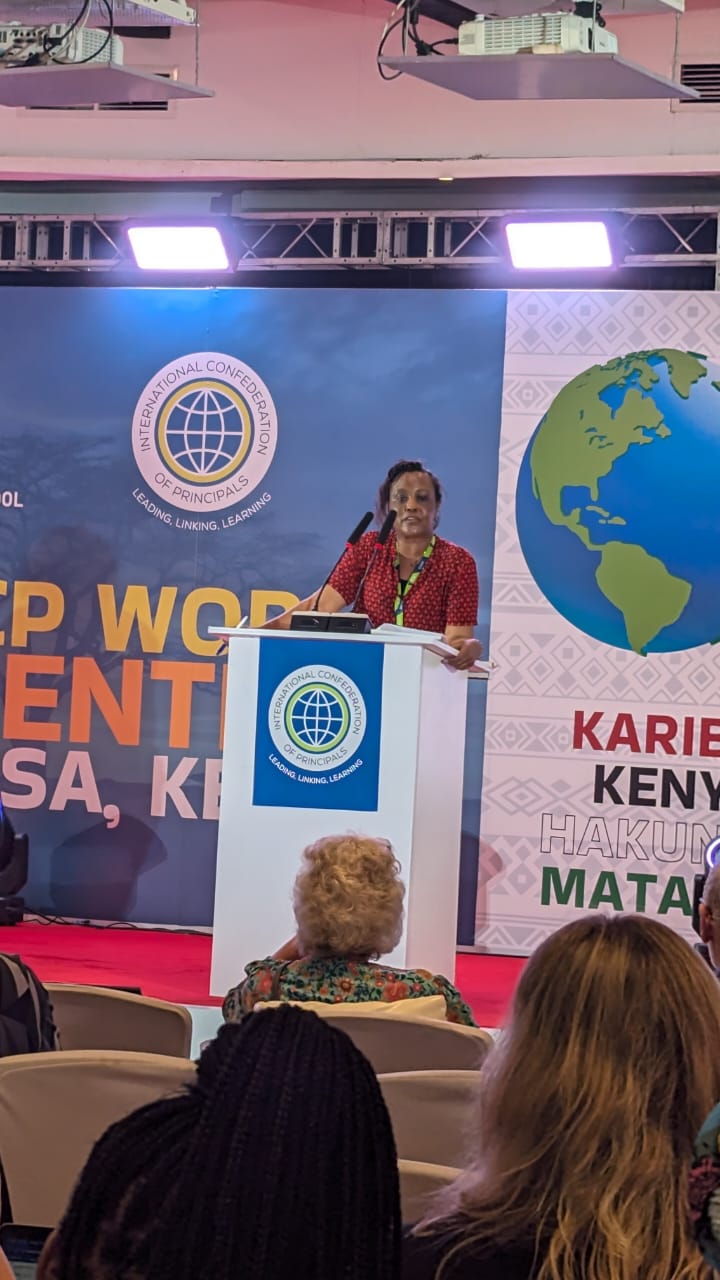
Plenary Keynote 5 – School Principals; Paving Future
Pathways for Learners
Dr. Nancy Macharia
Teachers Service Commission
(Delivered by Antonina Lentoijoni)
Opening Quote and Importance of Principal Leadership:
- Dr. Macharia begins by quoting research by Jason Grissom, emphasizing that improving school principals has a high potential return on investment.
- She highlights the significant role the Teachers Service Commission (TSC) has played in the Kenyan community.
Focus on Principals and Their Role:
- Principals are at the epicenter of implementing policies and performing technical and administrative roles, critical for the quality of learning and academic achievement.
- The role of principals in impacting student outcomes has been a subject of considerable research and is highly relevant, not just in Kenya but globally.
Kenya’s Competency-Based Curriculum (CBC):
- Kenya is currently implementing a new curriculum called the Competency-Based Curriculum (CBC), which includes three pathways for senior school students: Arts and Sport Science, Social Sciences, and STEM.
- The first cohort of students will join senior school under this curriculum in 2026, making the discussion on how principals can facilitate these pathways timely and critical.
Key Questions for Principals Regarding CBC:
- Dr. Macharia poses four key questions regarding Kenya’s preparedness to implement CBC pathways:
- How prepared is Kenya to admit learners into these three pathways?
- Are the necessary curriculum materials available to ensure a smooth rollout?
- Do schools have adequate facilities and equipment to support CBC pathways?
- What role will principals play in facilitating the smooth implementation of these pathways when over a million students enter senior school in 2026?
The Principal’s Role in Policy and Technical Decision-Making:
- Principals must be actively involved at the policy and technical levels in determining career pathways for learners.
- Principals should provide feedback to policy-makers, work closely with the Teachers Service Commission, and collaborate with the Ministry of Education.
Principals’ Impact on Student Outcomes:
- The effectiveness of a principal has a significant impact on student achievement, nearly equivalent to that of having effective teachers.
- Effective principals should engage in instructionally focused interactions with teachers, including teacher evaluation, instructional coaching, and establishing data-driven instructional programs.
Building a Positive School Climate:
- Principals should focus on creating a productive school climate characterized by trust, teamwork, engagement with data, and continuous improvement.
- Collaboration and professional learning communities among teachers should be encouraged to enhance student learning.
Managing Resources and Partnerships:
- Effective management of personnel and resources is crucial, especially in resource-limited settings like Kenya.
- Principals should foster collaborations and partnerships to extend programs and mobilize resources to support teaching and learning pathways.
Monitoring and Evaluation:
- Principals must have proper monitoring and evaluation mechanisms in place to track the implementation of pathways and inform policymakers on future directions.
Conclusion:
- The impact that principals make today will resonate for generations.
- Dr. Macharia urges principals to ensure that the pathways created will lead learners to a brighter future, thanking the audience for their attention.