Learning and its Evolution in the Era of Artificial Intelligence: Reconstructing the Paradigm of Human Learning and Teaching.
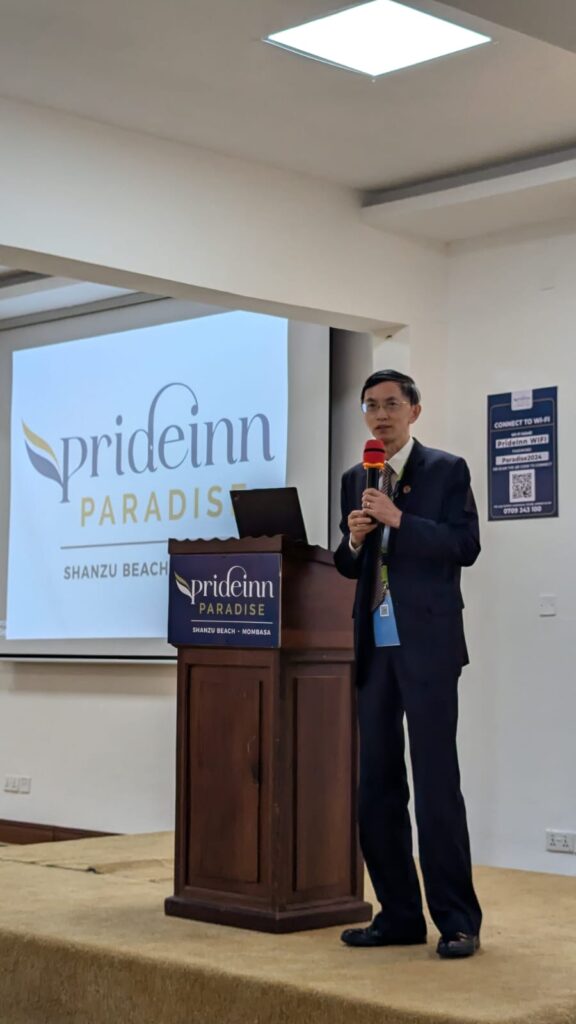
Dr. Li Zheng-tao
SUMMARY
Main Questions Addressed in the Speech
What is future learning?
Focuses on cultivating the ability for future learning in children and students.
What evolution has human learning undergone?
Examines the stages of human learning evolution and the current stage in today’s context.
What is the most ideal way of learning?
Identifies the best learning method, especially in the AI era.
What is the most valuable learning in this era?
Determines which learning methods are most conducive to student development.
How should educators approach the changes brought by AI?
Discusses the mindset educators should adopt in response to AI-driven changes in learning methods.
Human Learning Evolution
First Stage: Natural Learning
Learning occurred naturally in life without any interference.
Second Stage: Cultural Learning
Learning was shaped by culture and education while hardware (human body) remained natural.
Third Stage: Intelligent Learning
Involves artificial intelligence, with both human software and hardware subject to artificial intervention.
AI is now a partner in learning and growth, evolving with humans.
Ideal Learning Methods
Traditional Learning Methods:
Learning occurs in practice: Emphasis on applying learned knowledge through experiments and practice.
Learning occurs through questioning: Students should start with their questions, not just answer the teacher’s.
Learning occurs in multi-dimensional dialogue: Includes dialogue with others, nature, and oneself.
Learning occurs in rational debate: Encourages critical thinking and rational discussion.
Learning occurs in output and expression: Active expression helps retain more information and ensures true understanding.
Learning in the AI Era:
Human-machine interaction: AI is a daily companion in learning.
Cross-boundary learning: Learning involves crossing traditional boundaries, including virtual and real worlds.
Creating interfaces: Learning occurs in creating new connections and interfaces.
Deep communication: Emphasis on in-depth, meaningful communication.
Mutual empowerment of human and AI intelligence: AI and human intelligence should enhance and evolve together.
Challenges and Dilemmas of Learning Evolution
Wearing new shoes but walking the old path:
Rote learning with AI: Continuing outdated rote learning methods using AI technology.
Neglecting students: Risk of further neglecting students’ needs with increased technology use.
Lack of critical thinking: Focusing too much on knowledge transmission without fostering critical thinking.
Lack of vitality in learning: Over-controlling students can lead to a loss of learning vitality.
Wearing new shoes but walking the wrong path:
Losing the soul of education: Overemphasis on technology risks losing core educational values and beliefs.
Losing tradition: Students are losing their love for books and sensitivity to text.
Lack of focus: Information overload from technology is leading to a loss of focus in learning.
Technology replacing teachers: The risk of AI replacing the irreplaceable role of human teachers.
Fragmented learning: Risk of superficial learning without deep understanding or creativity.
Learning without education: The need to retain the role of teachers in shaping students’ learning experience.
Separating humans and AI: It’s essential to avoid seeing AI and human intelligence as mutually exclusive.
Educators’ Mindset in the AI Era
Emphasizes the importance of keeping human values at the center of AI technology.
Educators must continue to aim for ideal education, even as technology evolves.
Education should be future-oriented, with a focus on constructing future-ready learners, teachers, and principals.
Conclusion
Dr. Li Zheng-tao’s presentation emphasizes the significance of understanding learning’s evolution, embracing the changes brought by AI, and maintaining a balanced, future-oriented approach to education.
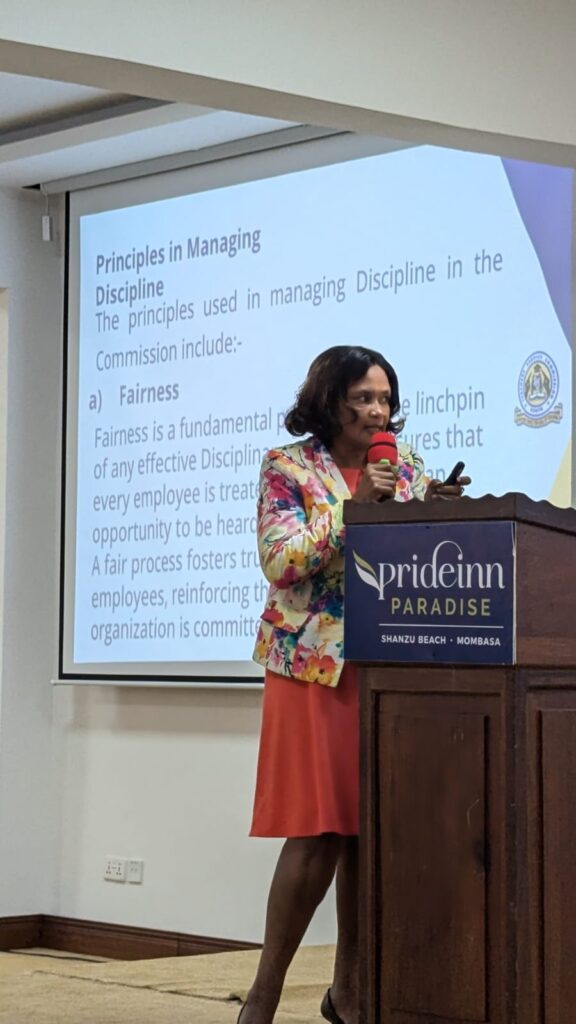
Teacher Service Commission of Kenya presenting on management of teacher discipline
The speaker emphasizes the importance of due process in disciplinary actions to foster trust and confidence among employees.
The principles of fairness, transparency, and integrity are highlighted as key to maintaining a just and effective disciplinary process.
Key Principles in the Disciplinary Process
Fairness
Employees are given written allegations and a notice period to defend themselves.
Ensures that the disciplinary process is conducted fairly, fostering trust among employees.
Transparency
Clear communication is crucial in informing employees of the specific offenses and the breached regulations.
Transparency minimizes misunderstandings, dispels rumors, and reinforces the commission’s commitment to an unbiased approach.
Integrity
Consistency in aligning disciplinary actions with regulations and labor laws is emphasized.
Decisions are made following the commission’s rules to avoid favoritism or discrimination.
Employees are presumed innocent until proven guilty, and allegations must be investigated thoroughly.
Disciplinary Process Overview
Investigation and Hearing
Complaints must be in writing and are followed by an investigation by a panel of at least three members.
The process involves inviting the accused to a hearing where they can defend themselves and present witnesses.
The hearing panel includes members of the board and secretariat, with a quasi-judicial exercise to ensure fairness.
The accused is allowed to cross-examine witnesses and challenge the evidence presented.
Decisions are based on the severity of the offense and the employee’s work history.
Levels of Disciplinary Actions
Minor offenses may result in administrative warnings.
Severe offenses, especially those involving children’s rights, can lead to interdiction or removal from the register of teachers.
Suspensions without pay for up to six months are possible depending on the severity of the offense.
Appeals and Reviews
Appeal Process
Employees can appeal disciplinary decisions within 90 days based on procedural flaws, insufficient evidence, or perceived unfairness.
Appeals are handled by a separate committee of three board members, excluding those involved in the initial decision.
The committee can uphold, modify, or revoke the disciplinary action.
Reinstatement
Teachers removed from the register can apply for reinstatement after 18 months, provided they demonstrate improvement or change, supported by references from the administration or community.
Challenges in the Disciplinary Process
Unreported Cases
Issues like moral behavior and sexual misconduct are often underreported due to community pressures or compromised witnesses.
Litigation
Some teachers bypass the appeal process and directly pursue legal action, challenging the commission’s decisions.
Resource Limitations
Limited resources hinder the commission’s ability to implement preventive measures effectively.
Psychosocial and Mental Health Issues
Many disciplinary offenses are linked to underlying mental health issues, complicating the disciplinary process.
Mitigation Strategies
Preventive Approach
The commission emphasizes prevention through the Teacher Induction, Mentorship, and Coaching (T-MEC) program, which helps new teachers understand regulations and professional expectations.
Efficiency
Disciplinary cases must be resolved within three months to ensure timely justice.
Delegation and Collaboration
Schools’ boards of management assist in the disciplinary process to expedite investigations and decisions.
Capacity Building
Continuous training for commission staff and school agents is provided to enhance the efficiency of the disciplinary process.
Partnerships
The commission collaborates with police, children’s departments, NGOs, and other stakeholders to address issues like sexual abuse and violence against children.
Conclusion
Role of Accountability and Integrity
Accountability, fairness, and integrity are essential for a healthy and productive work environment.
Balanced Approach
The commission uses both corrective and preventive measures to manage disciplinary issues while ensuring due process.
Gratitude
The speaker concludes by thanking ICP for the invitation, reaffirming the commitment to maintaining a fair and transparent disciplinary process.