

Click here to return to the Convention Page
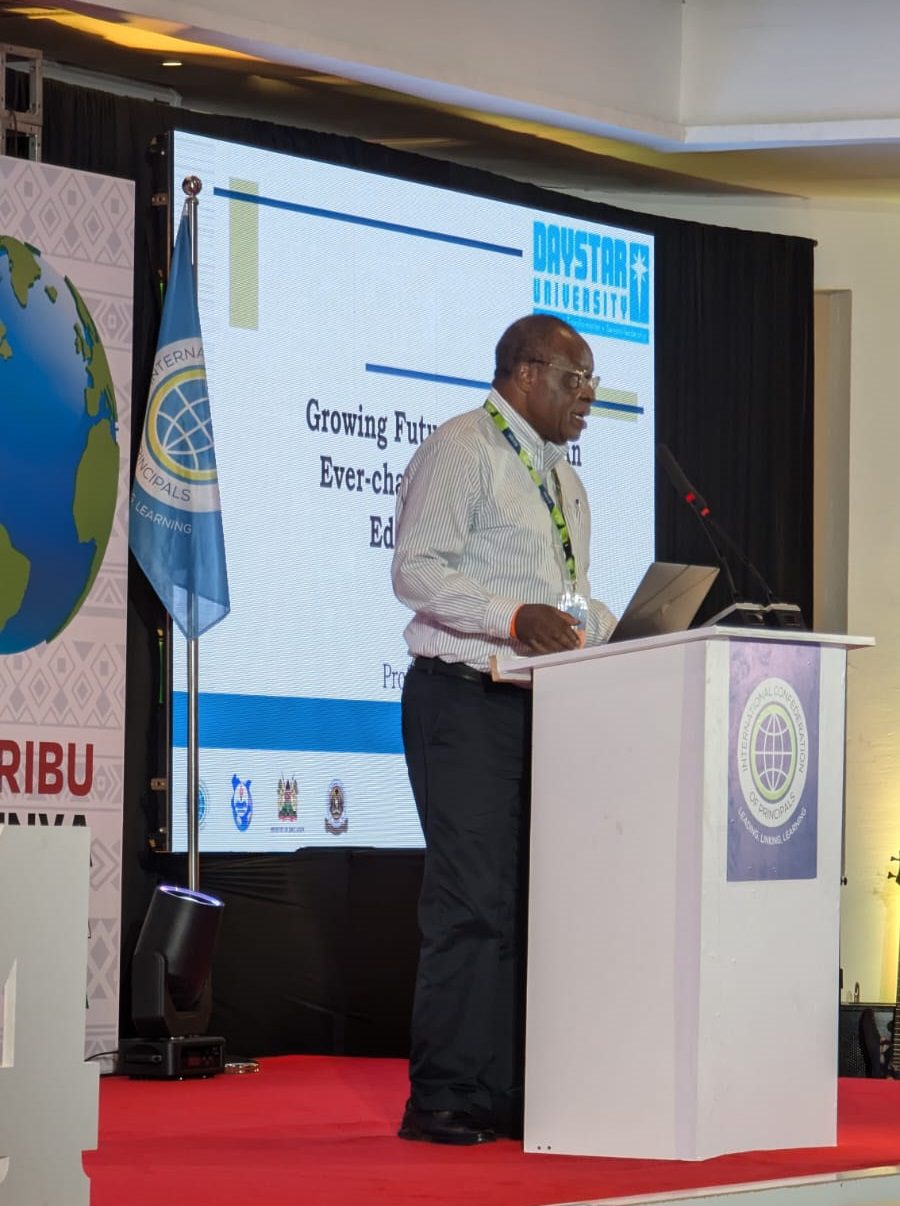
Plenary Keynote 2 – Growing Future Leaders in an ever changing world
Professor Laban Ayiro
Vice Chancellor – Daystar University
Introduction and Appreciation:
- Expresses gratitude for the opportunity to speak at the conference.
- Reflects on his experience managing schools in Kenya, acknowledging the challenges faced in the education sector.
Growing Future Leaders in an Ever-Changing World:
- Stresses the importance of dynamic and adaptable approaches to leadership in education.
- Highlights the economic challenges in Africa that necessitate innovative solutions.
Critical Thinking and Problem Solving:
- Emphasizes the need for future leaders to think critically and solve complex problems.
- Advocates for an education system that fosters these skills through problem-solving and exploration.
- Critiques Kenya’s competency-based curriculum (CBC) for lacking a futuristic approach and evidence-based policy formulation.
Lifelong Learning:
- Encourages continuous learning as essential for leadership, emphasizing that education doesn’t end with graduation.
- Urges principals and educational leaders to engage in lifelong learning.
Cultivating Emotional Intelligence (EQ):
- Highlights the importance of EQ in leadership, especially in understanding and managing emotions and empathizing with others.
- Uses examples to show how EQ, rather than IQ, is crucial in leadership roles.
- Illustrates the concept of EQ with a mind map, focusing on self-awareness, motivation, empathy, social skills, and self-regulation.
Application of Emotional Intelligence:
- Discusses how EQ is applied in leadership, personal development, mental health, conflict resolution, and teamwork.
- Shares personal experiences, including navigating crises through emotional intelligence rather than legal battles.
Study on Emotional Intelligence:
- Mentions a study conducted at Texas A&M University showing a strong correlation between a school’s performance and the emotional intelligence of its leaders.
Innovation and Creativity in Education:
- Advocates for an education system that encourages creativity by allowing students to explore new ideas, take risks, and learn from failure.
- Stresses the importance of integrating arts and creative thinking exercises into the curriculum.
Global Awareness and Cultural Competence:
- Highlights the need for global awareness and the ability to navigate cultural differences, which are essential for future leaders.
Fostering Ethical Leadership and Integrity:
- Stresses the importance of ethical leadership, which must be demonstrated through actions and behavior by educational leaders.
Integrating Technology and Digital Literacy:
- Emphasizes the importance of technology and digital literacy in the future of education.
- Critiques the low internet penetration in Africa and urges for deeper integration of technology in schools.
Collaboration and Teamwork:
- Advocates for promoting collaborative learning environments in schools, where students can work together and learn from each other.
Adapting to Change and Building Resilience:
- Discusses the importance of adaptability and resilience in leadership, especially in the face of changing educational landscapes.
Unemployment vs. Unemployability:
- Raises the question of whether unemployment is due to a lack of jobs or a lack of employability, emphasizing the importance of character and values.
Values in Leadership:
- Highlights the importance of values in leadership, suggesting that strong values can attract resources and opportunities.
- Discusses the concept of a strategic fit between resources, values, and the environment.
Mind Map on Creating Future Leaders:
- Summarizes the talk with a mind map focusing on:
- Leadership skills (communication, teamwork, ethical decision-making).
- Lifelong learning (continuous development, curiosity).
- Innovative curriculum and global perspectives.
- Adaptability and resilience (emotional intelligence, growth mindset).
Final Thoughts on Truth, Goodness, and Beauty:
- Leaves the audience with a philosophical question about the relationship between truth, goodness, and beauty.
- Encourages leaders to uphold truthfulness, which leads to goodness and, ultimately, beauty in their institutions.
Call to Action:
- Urges the audience to work together to create effective, inclusive, and sustainable educational environments.
- Encourages embracing innovation, collaboration, and committing to values of equity and sustainability.